Showing posts with label Courses. Show all posts

Wednesday, March 20, 2013

Buddhism-related family camps

I'm currently in the process of compiling information on 2013 summer camps and retreat-type functions that incorporate a Buddhism and/or mindfulness element, camps that would be suitable for both families and teenagers as a separate group.
Well, yes, that would be a challenge.

Screengrab from this Beliefnet post
I'm most interested in those offerings that have less emphasis on the doctrine of specific Buddhist lineages and less of a cultural and ritualistic emphasis.  In other words, venues that practice and teach the fundamentals of Buddhist belief in an introductory and less formal interactive context. 

If you have any suggestions in this regard, please feel free to email me (SouthHoustonSangha - at - gmail).  Thanks!!

Monday, November 19, 2012

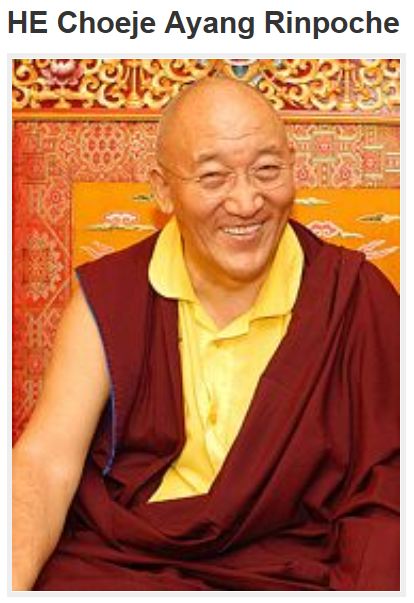
H.E. Ayang Rinpoche teaching in Houston

H.E. Ayang Rinpoche (homepage here), a Tibetan master of the practice of Phowa who teaches world-wide, is scheduled to deliver a program in Houston during the period December 17 through 21, 2012.
Photo screengrabbed from this site.
The program is titled "Ten Levels Buddha Amitabha Meditation Teachings" and will reportedly be presented in both English and Vietnamese. 
Screengrab of the program as it was published at this site
The Dharma Institute website indicates that the Viet Civic Center (Nha Viet) will be the venue for this event. 
The Viet Civic Center is located at 11360 Bellaire Blvd. Houston TX  77072, between BW-8 west and South Kirkwood. 
According to Ayang Rinpoche's website, further information about this program can be obtained by contacting anjopham@sbcglobal.net. 

Wednesday, August 8, 2012

Dharma training flyer

This recent post explained the upcoming Dharma classes to be held at Chua Phap Nguyen.

This eye-catching flyer is also being distributed in hard copy to local area business and service venues to spread awareness of the course.  If you happen to catch a glimpse of it with your "good eye", yes, it's the same course as was described here.  Click on this JPG to expand to a larger, more readable view.

Courtesy of Chua Phap Nguyen.

Sunday, July 29, 2012

Buddhist lay course in Houston (Dharma training)

The purpose of this blog post is to provide a brief overview of an upcoming Dharma training opportunity on the south side of greater Houston, at Chua Phap Nguyen / Dharma Spring Temple in Pearland. 
Lotus blooming in the Chua Phap Nguyen pond,
July 26, 2012.
Ordinarily on a blog post of this type, I would default heavily to the source website for the content in question.  However, in this case, the website providing course information is currently down and is not expected to be re-established until next month.  In the meantime, information about this upcoming course is not being effectively broadcast, and therefore I'm attempting to help fill that intervening gap.  Check with www.dharmatraining.org for future refinements to the course's sourcepage.  Information on that page, when re-established, may supersede information presented in this post.
Additionally, course information will likely be accessible via this route as well.
Chua Phap Nguyen is associated with Chuang Yen Monastery in New York, which features this Buddhist Association of the United States (BAUS) website briefly announcing their programmatic counterpart to this training.  This older PDF flyer also describes one previous year of the New York training program, and this local news piece describes the program and the experiences of participants with levels of thoroughness and depth not commonly seen in current-day commercial journalism. 

The Great Buddha statue at Chuang Yen Monastery.
Photo screengrabbed from this Return to the Center blog post.
The tentative format for the 2012-2013 Houston training class is described in the following sections.

GENERAL SCOPE. (this summary excerpted from internally-distributed course materials)

The Dharma Training Program is a three-year curriculum of Buddhist studies  that is designed to give students an in-depth understanding of Buddhism and Buddhist practice in the three major traditions--Theravada, Mahayana, and Vajrayana.  The 2012-2013 Houston  course will be led by the Chua Phap Nguyen Abbot, Venerable Thich Tri Hoang

The first year of the program provides a broad overview of Buddhism. The second year focuses on Buddhist Sutras. The third year focuses on Buddhist philosophy and applications such as science, psychology, and psychotherapy.

New students may enter the program in any of the three years and, having completed all three years in any order, are awarded a certificate.

An optional fourth year (by invitation of the teacher) prepares students to become lay Dharma teachers. Those who complete the fourth year satisfactorily may be ordained in the Dharma Teacher Order.

READING LIST.

The following books will be studied by the group in the first year of the Houston course:
  1. Old Path White Clouds
  2. Heart of the Buddha's Teaching
  3. Tree of Enlightenment
  4. A Concise History of Buddhism
  5. Vision and Transformation
  6. Zen Women:  Beyond Tea Ladies, Iron Maidens and Macho Masters
  7. The Tibetan Book of Living and Dying
  8. Zen Keys
  9. Buddhism in America
SCHEDULE.

Regular Classes.  The class will meet every other Saturday (with adjustments for teacher schedule, holidays, etc.) from 9:00 a.m. until noon on the following dates (with reference to the books being studied during each class). 
  • September 15, 2012 (Old Path White Clouds)
  • September 22, 2012 (Old Path White Clouds)
  • October 6, 2012 (Heart of the Buddha's Teachings)
  • October 20, 2012 - Day of Mindfulness*
  • November 3, 2012 (Heart of the Buddha's Teachings)
  • November 17, 2012 (Tree of Enlightenment)
  • December 1, 2012 (Tree of Enlightenment)
  • December 15, 2012 (A Concise History of Buddhism)
  • January 1, 2013 (Tuesday) - Day of Mindfulness*
  • January 5, 2013 (A Concise History of Buddhism)
  • January 19, 2013 (Vision and Transformation)
  • February 2, 2013 (Zen Women)
  • February 16, 2013 (The Tibetan Book of Living and Dying)
  • March 2, 2013 - Day of Mindfulness*
  • March 16, 2013 (The Tibetan Book of Living and Dying)
  • April 6, 2013 (Zen Keys)
  • April 13, 2013 (Buddhism in America)
* On these dates, the class will meditate without reading presentations or discussions. These "mini-retreats" will run from 9 a.m. - 5 p.m. and may be open to non-class participants as well (space permitting - verify this with Chua Phap Nguyen directly, if you are interested in participating).  The Abbot will lead a meditation in the morning and the afternoon of each day. Participants can also have an opportunity for private consultation with the Abbot on these days. Lunch will be made available by the Temple, and each day will end with a tea ceremony. A $20 dana (donation) is requested for each Day of Mindfulness attended. 

The format for each Saturday class is anticipated to be as follows:
  • 15-minute sitting meditation
  • 1-hour summary presentation by the class participant assigned for that date
  • 45-minute breakout group discussions
  • 20-minute walking meditation
  • 25-minute group discussion
  • 15-minute sitting meditation
End-of-Year Retreat
April 26, 27, and 28, 2013 - Retreat at Chuang Yen Monastery in New York.  The cost for the retreat is anticipated to be a $150-250 donation to the monastery (to help cover food and lodging), plus airfare and ground transportation for each participant.  Details on this retreat will be published separately. 

COSTS.

The requested dana for this training program itself is $125,  Payment is required within the first few weeks of the initial start date (September 15) but early payment is appreciated.

Note that the suggested donations for Days of Mindfulness retreats plus end-of-year 3-day New York retreat costs cited above are in addition to the course costs.  Therefore, the total for engaging in all scheduled activities associated with this first-year course is anticipated to be approximately $800. 

The description above is tentative and subject to future updates and refinements.  This blog post may be re-edited to reflect such changes.  And again, check with www.dharmatraining.org for course information as well. 
Flowers blooming on the Chua Phap Nguyen grounds,
July 26, 2012.

Tuesday, June 5, 2012

Center for Mind Body Health: June 2012 Meditation Class

This is one in a series of "Profile" posts in which different local resources will be described so that seekers will understand in advance what to expect should they decide to visit.

In this case, a commercial service is being described rather than a Temple or lay practicing group.  For a general list of nonprofit Temples and other local meditation groups, please see the TEMPLE PROFILES category.

***
The Center for Mind Body Health in the heart of Clear Lake announces a meditation class beginning tomorrow night and running for four dates (Wednesday June 6, Wednesday June 13, Monday June 25, and Wednesday June 27), from 6:30 pm to 8 pm each of those four evenings.  
Center for Mind Body Health location,
screengrabbed from Googlemaps.
This is a general meditation instruction based upon the pioneering mindfulness methods of Jon Kabat-Zinn and others. 
Screengrab from the CMBH web materials.
The training is administered by Gwen Brehm, a Licensed Professional Counselor and Licensed Marriage and Family Therapist.  A short website announcement can be found here, and for further information please contact their offices per the URL above. 

This training is usually offered a couple of times per year, so if you miss this session, check back with the Center for Mind Body Health for future sessions. 

Moderator's Viewpoint.  I am including this announcement pertaining to a for-profit business on an otherwise-noncommercial blog for the following reasons:
  1. I had known Gwen Brehm socially for years, knew that she offered counseling services, but had absolutely no knowledge that she had engaged in meditation training as a professional focus until learning about it more-or-less by accident late last year.  Therefore, to some degree, I can vouch for this services provider on a personal level independent of any shared interest in meditation.  I receive no financial or material benefit from re-broadcasting the announcement of Gwen's meditation class.  I was not asked to publish it.
  2. Gwen's profit intention in charging a modest fee for this meditation training is minimal.  In an email to me in October 2011, she noted that, when no fee is charged for a course like this, the general public tends to interpret that the corresponding instruction is not authentic.  In other words, no fee, no perception of value.  Quite a commentary on our materialistic consumer culture, eh? 
  3. It's appropriate to include general references to professional psychological services in this blog in cases where there is specific knowledge of such services.  From my discussions with a wide variety of people seeking to investigate meditation in their own lives, it has become clear to me that there is a definable segment of the population that prefers to be introduced to meditation concepts within a formal institutional setting rather than in a religious setting.  Occasionally I've heard the comments along the lines of, "I'd like to try meditation, but I don't look into it because I'm afraid of what I might find inside my own head."  These are people who may realize a greater experience of personal security and comfort if they know they are being instructed by a licensed professional.  Meditation short-courses such as the one described above are useful because they allow people to become introduced to meditation's potential without a need to make longer-term financial or participatory commitments, and without becoming potentially entangled in sectarian associations. 

Thursday, May 24, 2012

COURSE REVIEW: Vipassana Fellowship's 12-week meditation course

Moderator's viewpoint:  In April, I published this post announcing the Vipassana Fellowship's 12-week meditation course, in which I'm one of the enrolled participants. 
Logo grab from
http://www.vipassana.com/
I had nothing substantial to say about the course at the time of that April post, however, given that I had no experience with it.  But the internet being the dynamic machine that it is, what's happening now is that searchers looking for independent reviews of this course are accessing that original post I published (I can detect things like that from the blog statistics), which is not at all helpful to them due to the post's non-substantive nature. 

For this reason, even though we are only on "Day 25" of what will ultimately be approximately an 84-day course, I'm offering my viewpoints now regarding it.

STRENGTHS OF THE COURSE:

(1) It can help supply a meditation framework.  Despite being a remotely-administered, non-classroom, non-retreat-based resource, the course actually can provide an additional dimension to personal meditation practice.  If you are a novice meditator (or more advanced) and are sitting on the cushion every day anyway, layering in an additional resource like this can impose a framework of discipline that may be challenging to achieve purely by solo effort.   A big percentage of Western convert Buddhists learn much of their practice by reading books, and in fact, there are some excellent purely-Vipassana (insight meditation) resources out there for this purpose, especially "Mindfulness In Plain English" which is available commercially in hard copy and for free PDF download at sites such as this one.
Photo of Bhante G., author of "Mindfulness In Plain English" from the Bhavana Society webpages.  Reportedly, "Mindfulness" has sold over a quarter million copies.  Well-known American Buddhist author and clinician Jon Kabat-Zinn called it "a masterpiece". 
However, natural limitations may arise with respect to a meditation learning trajectory that relies largely on the literature.  Let me explain using analogies.  Do you remember taking science courses in high school and how they were divided between lecture time and lab time?  Procedures may have seemed very clear to you when explained in the classroom lectures, but when it came time to actually place your hands on the laboratory apparatus and start manipulating it as instructed, did you hesitate unexpectedly and say to yourself, "Wait a minute - I'm supposed to do what, now?  I'm not as clear about this as I thought I was."  Suddenly the theoretical concepts that seemed so self-evident to you in the lecture were a bit more difficult to tackle once you had to deal with them on a purely-practical level. 

And I need not use a scientific analogy for this - while in school I often experienced the same phenomenon in art classes:  "OK, we've studied the Impressionists, and now it's time for me to take my place in the studio and actually produce a work that is consistent with Impressionistic techniques."  Despite having sat through a clear lecture, I would proceed to stare at a blank canvas, unsure of how to actually get the effort underway.

The Vipassana 12-week course can effectively turn your cushion time into that laboratory or that art studio.  It breaks the exercises down into manageable bites that can be successively tackled, in the style of: "First you pick up the paintbrush, and then you dip it in the paint..."
V is for Vipassana meditation??
Microsoft royalty-free clip-art.
(2) It's "do-able" by participants with "real lives".  Following the daily directions and readings does not take an inordinate amount of time each day (30 to 45 minutes minimum, including and assuming you are meditating for at least 20 minutes each day).  People with jobs and families can manage it.  At one point, I fell behind a few days due to personal commitments interfering with my time.  I felt I was able to add extra meditation sessions and re-read the daily material and cover my gap sufficiently well. 

(3) It's extremely helpful to hear the instructor's description of personal hurdles.  It turns out that the instructor has faced one of the same personal obstacles to practice as I myself have found.  Reading his logical descriptions of how he dealt with that provided me with a perspective that I have not yet encountered in any book.

LIMITATIONS OF THE COURSE

(1) Participants must be highly self-motivated.  This is true of every on-line learning venue, whether its a meditation course or a Defensive Driving course - you have to step up to the plate and discipline yourself to actually follow through with the exercises.  Otherwise you'll just be receiving lecture material without the added dimension of practical training.  If you don't perceive yourself as having sufficient self-motivation at this point, it may be wise to avoid potential discouragement and instead seek a more directly-guided, in-person instructional venue. 

(2) Those who are completely new to meditation may wish to first investigate some of the literature.  If you don't have existing familiarity with basic meditation concepts and theory, you may wish to review a bit of the literature prior to enrolling, or else you may feel a bit intimidated by the new information being supplied at a rapid daily pace.  The Bhante G. book referenced above is a good foundational resource, and it's potentially available for your immediate use via the free PDF download (if the link above expires, simply Google for it and find another active PDF source).

I hope these viewpoints help you understand this online course!  Thanks for reading, and please contact me via southhoustonsangha - at - gmail if you have any questions.
:-)
Question grab from the Vipassana.com homepage.  Additional answers to common questions are published at this URL:
http://www.vipassana.com/course/faq.php

Sunday, April 29, 2012

Vietnamese cooking class

A lucky group of aspiring chefs learned some Vietnamese vegetarian cooking at its finest during a Saturday morning class presented yesterday in English at Chua Phap Nguyen (Dharma Spring Temple), which is located on the east side of Pearland.
Sister Phap Nghiem (pronounced similar to "Pap Neem") served as the very capable instructor.  Here she expertly peels a jicama, a vegetable that was unfamiliar to most of the Westerners in attendance. 
The first item on the menu was Vietnamese spring rolls.
Asian recipes, and vegetarian dishes in particular, tend to be very sensitive to cooking technique, because they rely on a medley of more subtle vegetable and spice flavors for taste, rather than on the stronger tastes imparted by animal products.  Here, Sister uses a stir-fry technique to prepare the "stuffing" for the spring rolls.  Note how all of the different ingredients have been cut into thin strips for stir frying.
Your blogger loves to eat but is probably a better photographer than cook, and so I had some extra fun doing "art shots" of the sky and forest as seen diffused through a close-up view of my rice paper sheet prior to hydrating it for the spring roll.  The pattern on the sheet derived from the pressing or rolling apparatus used during its manufacture.
See what I mean?  Here is my spring roll, wrapped in the same rice paper sheet as shown above, but with no special skill.  It's supposed to be a nice neat uniform cylinder, with the lettuce and mint leaves encasing the inner ingredients, and then the rice paper enveloping the works.  It's going to be fun to practice improving my technique in the future, because these things were absolutely delicious!  Sister also taught a recipe for making the peanut sauce that goes so well with these rolled critters.
The spring rolls were followed by a vegetable curry soup.
Tofu, carrots, taro root (a tuber vegetable used as a food staple throughout Asia), sweet potato, and regular potato assembled for the soup, which also included mushrooms, onions, cabbage stock, coconut milk, lemongrass, an Asian packaged product called "bean curd sheet", and several spices.
Lookin' good!!  :-)
Awesome stuff!
This class was a wonderful learning experience, with the food being rich, flavorful, and satisfying.  And the social experience equally rich, as the class was attended by a wide range of men and women, many of whom were not otherwise associated with this Temple. 

This particular class was conducted too soon after the initiation of South Houston Sangha News for me to post about it in advance, but I will announce future classes.  Future posts will also provide additional information on Chua Phap Nguyen / Dharma Spring Temple.

Saturday, April 28, 2012

A Kadampa teacher coming to Houston

Post Update July 6, 2013: This organization appears to have established this new webpage for the local Houston center.  Original post continues below.

***

The April - July 2012 issue of the greater Houston continuing adult education periodical called Leisure Learning Unlimited lists a course entitled "Modern Buddhism - Buddha's Guide to a Joyful Life" to be delivered in the Greenway Plaza Area on three successive Saturdays (May 5, 12, and 19) from 10:00 a.m. - 11:30 a.m.  The cost is nominal (approx. $60).  There does not seem to be a separate internet URL describing the syllabus for this short-course, but a bit more information is available on page 28 of this PDF (download advisory:  5 megabyte file). 

In my mind's eye, I can hear the obvious question that would arise in many members of the greater Houston Sangha:  "What the heck is Kadampa?!"
:-)

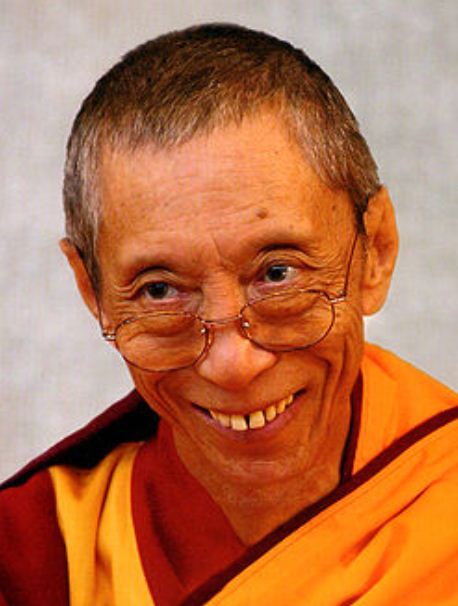
The short answer is thisThe New Kadampa Tradition is an international Gelug Buddhist school begun in 1991 by this Tibetan monk.
Venerable Geshe Kelsang Gyatso - Spiritual Director of the New Kadampa Tradition - International Kadampa Buddhist Union. NKT-IKBU ©New Kadampa Tradition
Reproduced from Wikipedia by permission.
Additional third-party description of the school can be found at this Wiki site (note that it bears a neutrality flag suggesting that some of the information may be disputed by some contributors).   

Kadampa Buddhism appears to be popular mostly in other regions of Texas, especially the DFW area, with center listings in Arlington, Coppell, Dallas (2), Fort Worth, Plano, and Grapevine.  There do not appear to be any standalone centers listed for the Houston area...
Screengrab from:
http://kadampa.org/en/centers/kadampa-centers-worldwide/
...but upon digging a bit deeper, it appears as if there may be one affiliated location, which is described elsewhere on the internet as a dance school.  The Kadampa listing for it bears the Austin telephone number for the center to be described below:
Screengrab from the same ASP cited above.
The instructor for this upcoming Leisure Learning Unlimited class, Gen Kelsang Ingchug, is a Western Buddhist nun who reportedly derives from the Chittamani Kadampa Buddhist Center in southern section of Austin (William Cannon / Sunset Valley area). 

I've sent an email to this center welcoming this teacher to Houston, announcing that South Houston Sangha News is available for the transmission of information and updates to the wider Houston community, and encouraging the sharing of this information blog for the benefit of all seekers.

As always, if anyone has updates or additional information regarding this post, please comment below or email me at SouthHoustonSangha@gmail.com.

Wednesday, April 25, 2012

Vipassana Fellowship's 12-week course

UPDATE MAY 24, 2012:  For a detailed review of the course referenced below, please see this post
***
This blog will focus on Houston-related news and events, but there are some resources that may be of interest to local practitioners despite being internet-based and/or associated with more distant locales. For this reason, they will be included here.

The next Vipassana Fellowship on-line meditation course begins five days from now on April 30 and, as of today, was still accepting enrollment for this session. 
Icon from the homepage
http://www.vipassana.com/index.php
I'm actually enrolled for this session, having signed up about two months ago.
I like to vet and validate independent offerings before engaging in or reporting on them, and that was difficult to do in this case, as there don't seem to be many published assessments of this course.  Shambhala SunSpace announced one of the 2009 course sessions, but did not provide any description or viewpoints regarding it.  Dr. Jim Hopper of Harvard University included it in a list of meditation resources that he published, also without commentary or feedback.  Fellow Blogspotters The West Wight Sangha did review the course quite favorably in this 2009 post

For those of you who are new to meditation and Buddhism, "vipassana" is a form of silent meditation that derives from the Theravada tradition of Buddhism, which is the oldest of the three main branches. 
A discussion of Theravada vs. other traditions is beyond the scope of this blog post, but if you would like a quick introduction, you might want to check out this easy-to-understand timeline available on Wikipedia.  For the moment, suffice it to say that Theravadin-style insight meditation has much in common with other silent meditation techniques, and is suitable for a wide range of Buddhist and non-sectarian practices. 
Screengrab from
http://en.wikipedia.org/wiki/Buddhism#Schools_and_traditions
In making my selection, I was drawn to the Vipassana Fellowship's course for a number of reasons.
  1. It is easily accessible, in being delivered over the internet.  I've had good experiences taking professionally-accredited continuing education courses online, as well as (gulp, I'll admit it) an online defensive driving course (yeah, it was a momentary loss of mindfulness that led to a speeding ticket, but that was a long time ago).
  2. The cost of $125 was in line with similar non-profit offerings. 
  3. This organization's website was mature and uncluttered, presenting just the necessary information with no frills, distractions, monetization, or ornamentation.  I was particularly impressed with their FAQ page.
  4. They reference two of my favorite authors, Theravadin nun Ayya Khema and well-known author Bhante G.  In light of this, I suspect that I will have existing famiarity with some of the material to be covered.
Anyway, I'll post thoughts and commentary on this course after I grow to learn more about it, which should begin to happen next week.
:-)